Custom Maze Generator
Create printable maze worksheets and puzzle book pages for kids activity book creators, teachers, parents, printable sellers, and …
Create printable maze worksheets and puzzle book pages for kids activity book creators, teachers, parents, printable sellers, and KDP publishers. Learn the workflow, preview practical use cases, and start building with Octozia when you are ready to turn the idea into a real printable page.
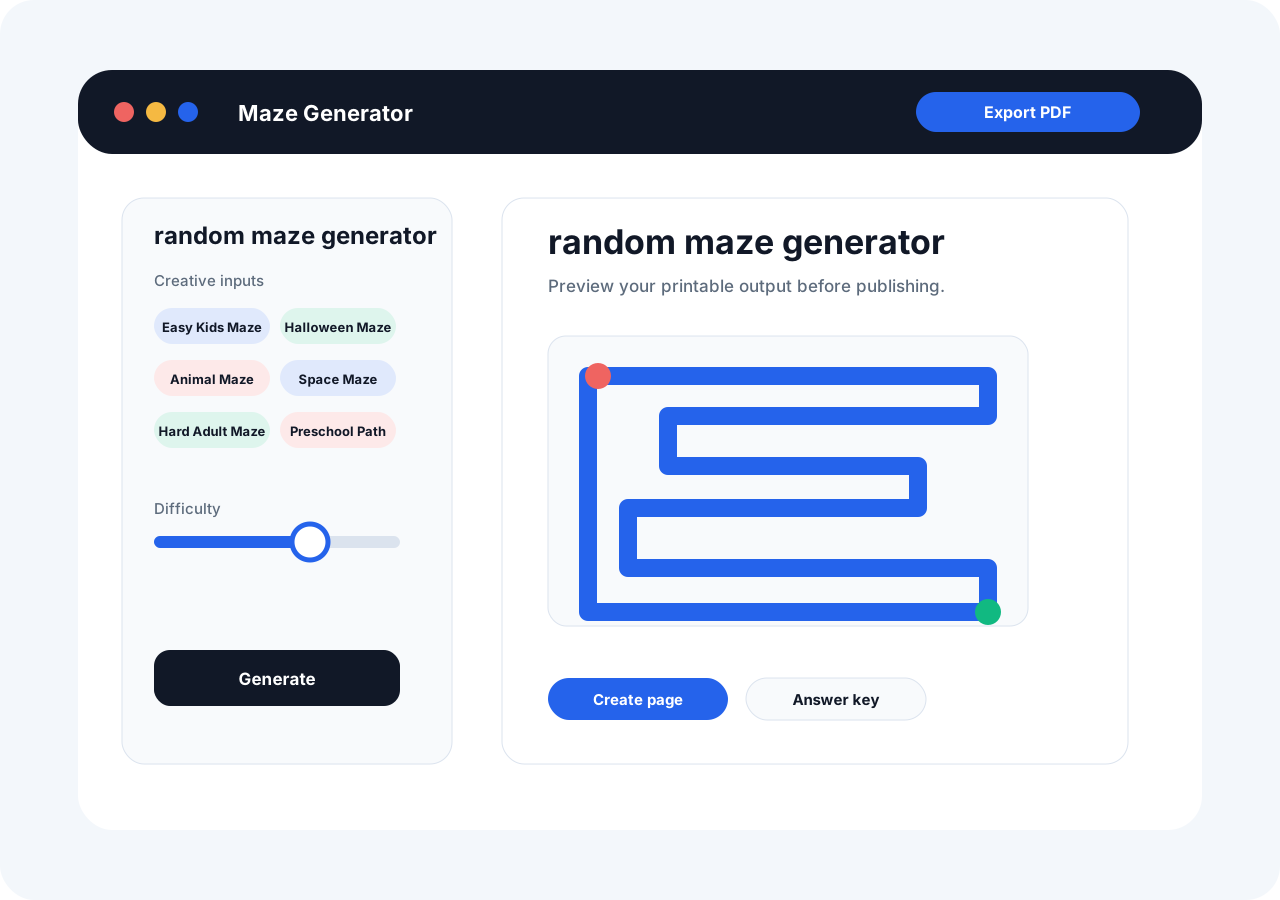
A page targeting random maze generator should not feel like a slow article that makes the visitor hunt for the useful part. The searcher is usually trying to create something now: a printable page, a classroom resource, a puzzle book interior, a digital download, or a test product for Amazon KDP. That is why this page is built like a practical guide and a conversion page at the same time.
With Octozia, the goal is to help creators move from idea to output faster. A good workflow for a random maze generator should help you choose a theme, prepare the inputs, generate the page, check the final design, and export something that can actually be used. The visitor should understand the process, see examples, and have a clear reason to create an account before leaving for another tool.
People searching for "random maze generator" want the tool and the result. The page should teach quickly, show the workflow, and keep the call to action close to the content.
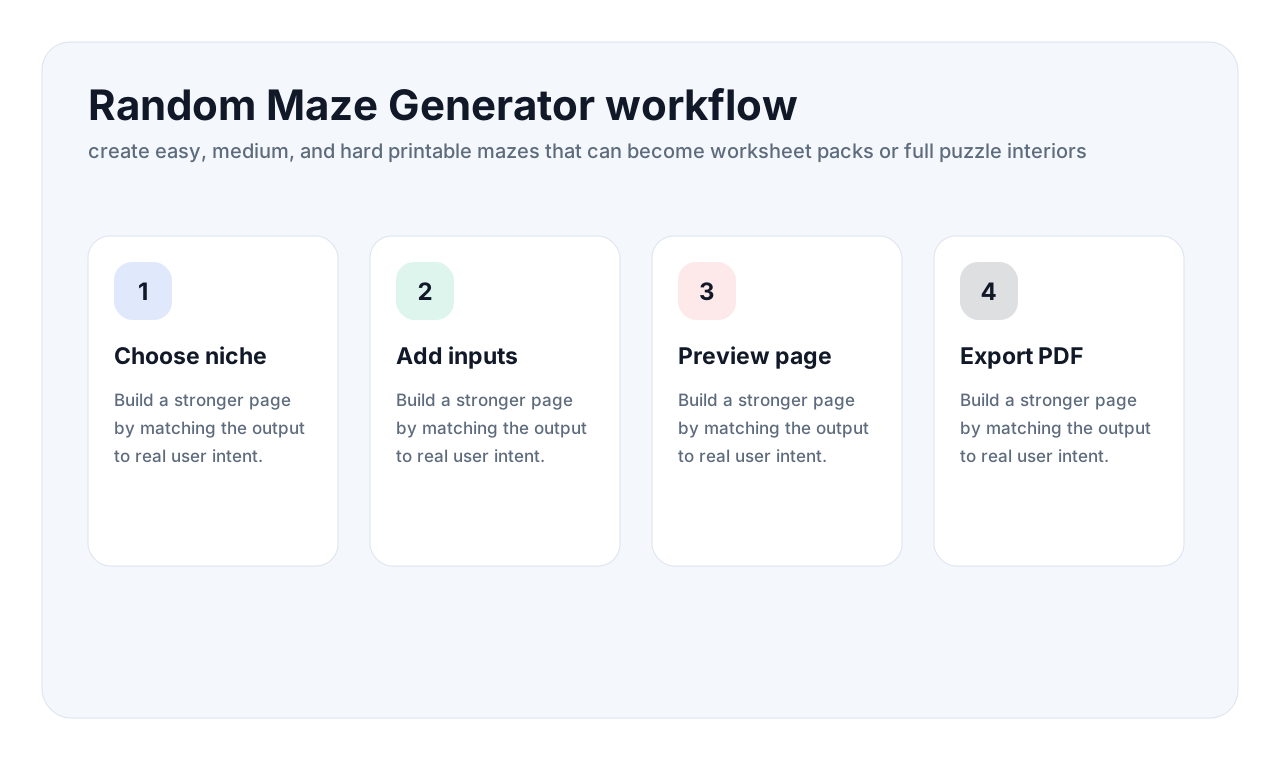
The process starts with a focused topic. Instead of building a generic page for everyone, choose a specific audience and outcome. For maze puzzles, that might mean preschool kids, elementary students, printable buyers, parents, and KDP activity book readers. A clear audience makes the output feel more intentional.
Next, choose the maze size, path style, and difficulty. An easy preschool maze needs wide paths and a simple route, while an adult maze can use tighter turns and more dead ends.
Then generate the maze and inspect it like a buyer would. Is the path readable? Is the difficulty right for the age group? Does the answer page make the product easier to use? If the answer is no, adjust the settings before publishing.
Decide whether the page is for a worksheet, printable bundle, lead magnet, or KDP interior before creating it.
Use focused terms, numbers, prompts, or settings that match the reader and the difficulty level.
Check readability, spacing, title clarity, and answer sections before using the output.
Use the final page inside a printable, a classroom pack, a digital product, or a KDP book interior.
This random maze generator can serve different buyers. Switch the tabs to see how the page should speak to each audience.
For teachers and parents, the page should emphasize quick preparation, clear instructions, age-appropriate difficulty, and printable output. A visitor in this group wants to save time and use the page immediately.
For KDP sellers, the page should connect the tool to book production: consistent interiors, answer pages, large print options, niche testing, and repeatable formatting. This audience is closer to paying for speed.
For printable shops, the page should highlight clean exports, themed bundles, seasonal products, and reusable workflows. They want pages that can become listings, bonuses, or downloadable packs.
When someone uses a random maze generator, the result needs to be more than a rough draft. The workflow should reduce production time, make the final page easier to use, and help you keep a consistent style across many pages. This matters when you are building a full printable collection or publishing multiple products.
Difficulty levels let you turn one idea into multiple products or book sections.
Printable paths help maze pages feel clean, readable, and kid-friendly.
Answer pages make puzzle books and worksheet bundles feel complete.
Kid-safe layouts keep spacing simple and instructions easy to understand.
PDF export keeps spacing stable for printables, worksheet packs, and book interiors.
Consistent pages make a puzzle book feel professional instead of assembled at random.
The mistake many creators make is focusing only on the first generated page. Real publishing requires a repeatable system. You need related pages, consistent output, clear examples, and a reason for visitors to keep building inside Octozia instead of starting over somewhere else.
Use this quick calculator to think like a publisher. A single maze puzzle page is useful, but a product needs structure: puzzle pages, answer pages, title pages, and section pages.
One theme can support many useful pages when the ideas are specific. Instead of creating one generic printable and stopping there, use this section to plan a larger collection around Maze content.
Use this mini idea machine to rotate angles for future articles, printables, or KDP sections.
These ideas can become product examples, downloadable samples, or sections inside a paid interior. The strongest content play is to connect each idea back to the main Octozia workflow so visitors always have a clear next step.
Before you publish or promote a finished maze puzzle, check the parts that affect usefulness and conversion. The visitor needs practical content, but the page also needs to point them toward a real Octozia action.
Keep the title clear, show the output early, explain who the page is for, and use natural wording such as a random maze generator in supporting text so the page does not sound robotic.
Place a trial button near the top, a tool-focused call to action in the middle, and a pricing or lifetime access option after the visitor understands the value.
Show examples, use cases, and production advice. The page should help the visitor make a better printable, worksheet, puzzle, or interior, not only define the topic.
Use Octozia to turn this idea into a practical page, a printable asset, or a KDP-ready production workflow.
Quality is the difference between a page that earns attention and a page that gets ignored. A useful article about a random maze generator should give the visitor a practical next step. It should not only explain the idea; it should show how the output is made, how it is used, and why Octozia can save time.
Keep the page readable. Use short sections, strong examples, visual previews, and calls to action that match what the visitor came to do. For maze puzzles, the output should feel organized enough for a real classroom, printable shop, or KDP product. If the page looks generic, visitors will compare it to every other free tool on Google.
Use internal links carefully. Link this page to the Octozia tool area, to related examples in the same cluster, and to pricing when the visitor has already seen enough value. Helpful links make the next step easier instead of forcing users to search again.
A random maze generator is useful for creators who want to produce printable maze worksheets and puzzle book pages faster, with cleaner structure and a clearer path toward printing, selling, or publishing.
Yes, if the final pages are readable, original, well organized, and formatted for the book you plan to publish. For KDP, always check trim size, margins, answer sections, and buyer experience before upload.
A free tool can be enough for one quick page. A professional workflow becomes more valuable when you need consistent formatting, many pages, organized exports, answer keys, or a repeatable production process.
Create a small set of related pages around the same theme, then connect them to the main Octozia tool, pricing, and any examples that show the output. This gives visitors a clearer path from idea to finished product.
Octozia ships the whole publishing stack: Sudoku, Word Search, Mazes, Math worksheets, Crossword, and Word Scramble — plus Redbubble & TeePublic bulk uploaders.
