Niche Research And Uploader Combo
niche research and uploader combo is a high-intent topic because the reader is already trying to fix buyer decision and tool selec…
evergreen niches print on demand is a practical entry point for sellers who want validated niche ideas before design and upload work begins. This page shows how to turn that search intent into a usable Octozia workflow, not just a generic explanation.
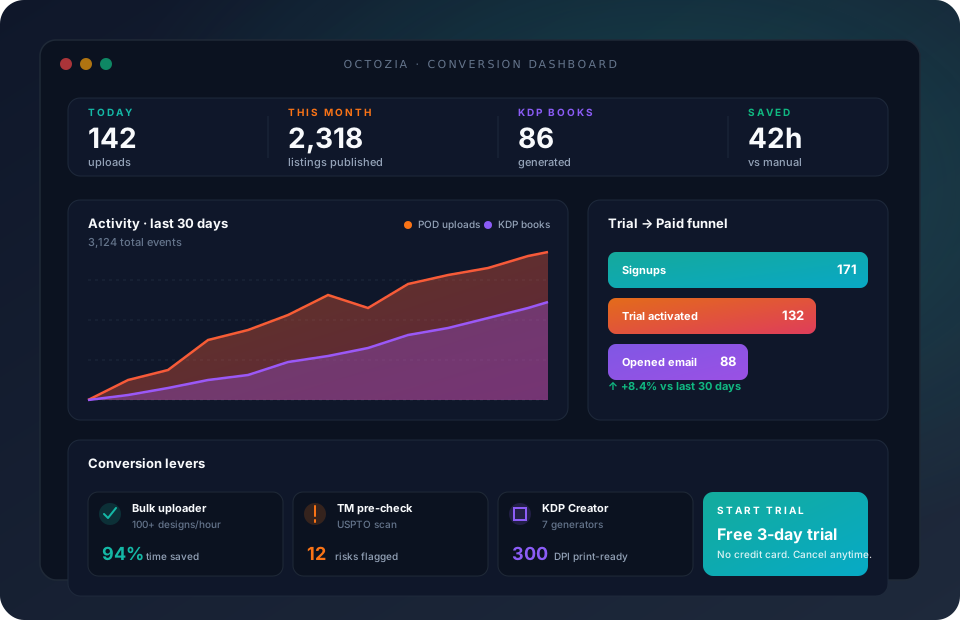
A niche is not just a topic. For POD, a useful niche has buyer language, product fit, manageable competition, and enough visual directions to support multiple designs. When someone searches for evergreen niches print on demand, they are usually trying to reduce friction: fewer tabs, fewer copy-and-paste mistakes, fewer weak tags, and fewer risky phrases in a marketplace account that needs to last.
Octozia's advantage is that the content can point directly to tools that match this intent. The Niche Research Tool gives the article a real product path: the reader can research a niche, prepare metadata, upload a batch, or run a safety check depending on the problem behind the query.
That matters for SEO because a visitor from Google should not land on a page that only defines the term. The page needs to answer the question, show the workflow, and give a clear next action. For this topic, the next action is testing Octozia on a small batch before scaling the entire POD process.
evergreen niches print on demand becomes valuable when it is tied to a repeatable publishing system. A seller can research a phrase, map it to a product type, generate or adapt metadata, check for trademark risk, then upload the design with fewer manual steps. The result is not only speed; it is cleaner decision-making before speed begins.
The common mistake is separating research from uploading. A seller finds a promising idea, creates artwork, then writes tags in a hurry while the marketplace form is open. That creates inconsistent listings. A better workflow stores niche notes, title patterns, safe tag groups, and product defaults before the batch reaches the final upload step.
For Octozia, this is exactly where the product story is strong. The public tools are not isolated tricks. TeePublic upload automation, RedBubble product configuration, niche research, tag copying, and trademark protection can all support one larger operating system for POD sellers.
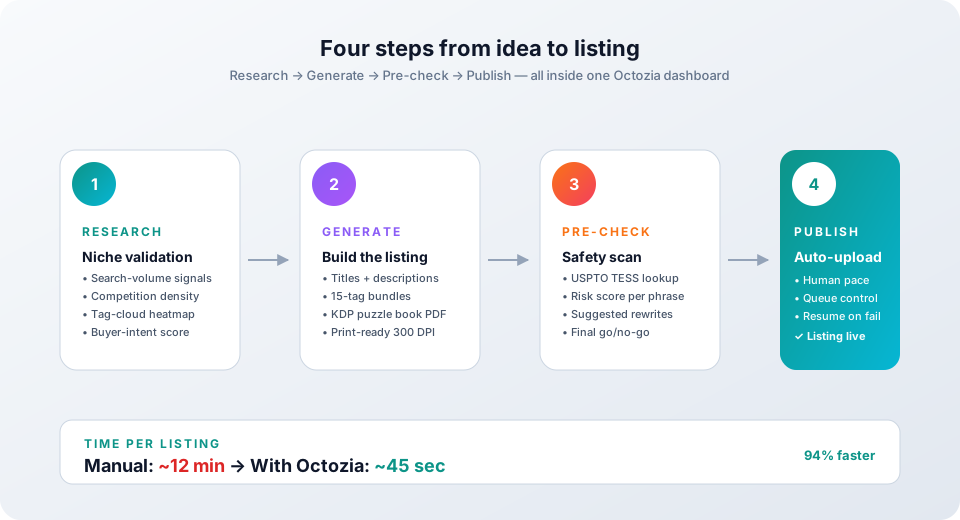
The Niche Research Tool fits this page because it gives the visitor a concrete way to act on the topic. Instead of reading about evergreen niches print on demand and leaving with another checklist, the seller can use Octozia to prepare a controlled batch, compare marketplace signals, or reduce the time spent inside repetitive upload forms.
On TeePublic and RedBubble, the difference between a weak workflow and a strong one is usually hidden in small tasks: naming files clearly, choosing categories, setting product defaults, reviewing tags, checking phrases, and avoiding duplicates. These tasks are not glamorous, but they decide whether a seller can scale without losing quality.
A strong article should therefore make the software feel useful immediately. The reader should see how the tool changes their day: research before design work, metadata before uploading, upload queues instead of manual sessions, and trademark checks before publishing.
Look for searches and marketplace pages that show real shopper intent, not only creator excitement.
Study how strong the existing results are and whether smaller sellers can still enter with better angles.
Score the niche by demand, competition, trend, product fit, and trademark safety before creating designs.
The best conversion path for evergreen niches print on demand is to connect the article to specific product capabilities. The visitor should understand why Octozia is relevant before they see a pricing page. These are the feature angles worth making visible in the content and internal links.
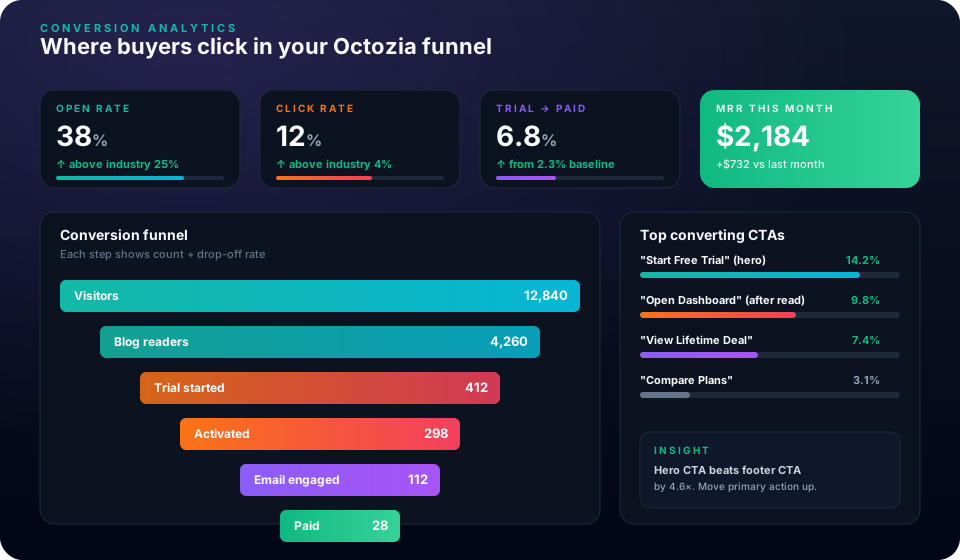
Use this simple planner to show the visitor why the problem matters. A seller handling a few designs can survive manual uploads. A seller handling dozens of designs across many product surfaces quickly reaches hundreds or thousands of small actions. That is where automation becomes a practical business tool.
Move the sliders to model a batch before using Niche Research Tool.
For this topic, the article should also help readers think of the next test. A good POD page does not only push a button; it helps the seller choose a narrower angle, a cleaner audience, and safer wording before they upload. That is why Octozia's research, tag, and safety tools should be linked together across these posts.
Cycle through quick POD angles that can be researched, tagged, and checked before upload.
Before sending a visitor to a trial or pricing page, the content should prove that Octozia understands the seller's real workflow. These checkpoints can be shown as dropdowns so the article feels like a working page rather than a wall of text.
Make sure the page answers what a seller expects from evergreen niches print on demand: a practical workflow, a tool path, and a reason to try the product now.
Point the article toward Niche Research Tool, then support it with related tools when research, metadata, uploading, or trademark protection overlap.
Group designs by theme, audience, platform, and product fit. This makes automation cleaner and keeps the content from sounding generic.
Titles, tags, and descriptions should describe the actual design, avoid filler terms, and include safe buyer language discovered during research.
Check slogans, tags, and titles for trademark risk before publishing. Automation should speed up clean work, not multiply mistakes.
Use Octozia to research better niches, prepare cleaner metadata, upload faster, and check risky phrases before they become account problems.
Octozia helps by connecting the topic to an action workflow: research the niche, prepare metadata, organize the upload batch, and check risky phrases before publishing. The exact tool path depends on whether the seller needs uploading, tags, niche research, or trademark protection.
Yes, as long as beginners start with smaller batches and review every listing. The same structure works at low volume: choose one niche, prepare a small set of designs, write clean metadata, check safety, then upload with control.
A good niche has search demand, clear buyer intent, enough design variation, product fit, and competition that leaves room for a new seller to publish a better angle.
A score makes the decision less emotional. It helps compare multiple ideas using the same signals instead of chasing the last topic that looked exciting.
Research before every major batch. Trends, competition, and buyer language change, so old assumptions can waste new upload time.
Yes. Research reveals the words competitors use, the phrases shoppers search, and the subtopics that can become safer, more specific metadata.
Octozia bundles the bulk uploaders, niche research, tag generators, trademark checks and KDP generators into one dashboard. Explore all Octozia tools, see how the KDP generators connect to the POD workflow, or jump straight to pricing.
